

Jaws Revisited

By Henry M. Holden In July 1916, the Matawan Library was listed closed for several months due to an influenza epidemic. So, what do people do for summertime activities? Escape the heat and humidity by heading for the famous Jersey shore and its cooling waters. That month was to find five people victims of shark bites. A series of shark attacks along the New Jersey coast killed four people and critically injured one, sparking nationwide panic and reshaping public perception of sharks. Between July 1 and July 12, 1916, five people were attacked by sharks along the Jersey Shore, with only one survivor. The attacks occurred during a heat wave and polio epidemic, which had driven large crowds to the beaches. The first attack took place on July 1 in Beach Haven, Long Beach Island, when Charles Vansant, a 23-year-old from Philadelphia, was fatally bitten while swimming with his dog. Vansant’s left thigh was stripped of flesh, and he bled to death shortly after being rescued. The second attack occurred on July 6 in Spring Lake, 45 miles north of Beach Haven. Charles Bruder, a 27-year-old bellhop, was swimming over 100 yards from shore when a shark severed parts of both his legs, leading to his death en route to shore The final attacks happened on July 12 in Matawan Creek, a freshwater stream more than a mile from the nearest bay. Eleven-year-old Lester Stillwell was killed, and two men attempting to rescue him were also fatally attacked. A teenage boy was injured but survived. Two days later, fishermen killed a shark believed to be responsible, reportedly containing human flesh in its stomach. Scientists still debate the species and scientific Impact. Scholars debate whether the attacks were caused by a great white shark or a bull shark, with some suggesting multiple sharks may have been involved in it. The attacks challenged contemporary scientific beliefs, as sharks were previously thought to pose little threat to humans. Ichthyologists reassessed shark behavior, and the events influenced shark research and public awareness. The public reaction and cultural legacy is still with us more than 100 years later. The attacks caused widespread panic, leading to shark hunts and bounties offered by the New Jersey governor. Beaches were temporarily enclosed with steel nets, and tourism suffered significant losses. The events entered American popular culture, inspiring Peter Benchley’s novel Jaws and subsequent film adaptations, cementing the image of sharks as dangerous predators . The 1916 Jersey Shore shark attacks remain a landmark event in American history, notable for their rarity, severity, and lasting impact on public perception of sharks. They highlighted the need for improved beach safety and reshaped both scientific understanding and cultural portrayals of sharks Between July 1 and 12, 1916, five people were attacked along the coast of New Jersey by sharks; only one of the victims survived—a child. The first major attack occurred on Saturday, July 1 at Beach Haven, a resort town established on Long Beach Island off the southern coast of New Jersey. Charles Epting Vansant, 23, of Matawan was on vacation at the Engleside H Matawan Hotel with his family. Before dinner, Vansant decided to take a quick swim in the Atlantic with a Chesapeake Bay Retriever that was playing on the beach. Shortly after entering the water, Vansant began shouting. Bathers believed he was calling the dog, but a shark was actually biting Vansant’s legs. He was rescued by lifeguard Alexander Ott and bystander Sheridan Taylor, who claimed the shark followed him to shore as they pulled the bleeding Vansant from the water. Vansant’s left thigh was stripped of its flesh; he bled to death on the manager’s desk of the Engleside Hotel at 6:45 PM. Despite the Vansant attack, beaches along the Jersey Shore remained open. Sightings of large sharks swimming off the coast of New Jersey were reported by sea captains entering the ports of Newark and New York City but were dismissed. The second major attack occurred on Thursday, July 6, 1916, at the resort town of Spring Lake, New Jersey, 45 miles north of Beach Haven. The victim was Charles Bruder, 27, a Swiss bell captain at the Essex & Sussex Hotel. Bruder was attacked while swimming 130 yards from shore. A shark bit his abdomen and severed his legs; Bruder’s blood turned the water red. After hearing screams, a woman notified two lifeguards that a canoe with a red hull had capsized and was floating at the water’s surface. Lifeguards Chris Anderson and George White rowed to Bruder in a lifeboat and realized he had been bitten by a shark. They pulled him from the water, but he bled to death on the way to shore. According to The New York Times, “women [were] panic-stricken [and fainted] as [Bruder’s] mutilated body … [was] brought ashore.” Guests and workers at the Essex & Sussex and neighboring hotels raised money for Bruder’s mother in Switzerland. The next three attacks took place in Matawan Creek near the town of Keyport on Wednesday, July 12. Located 30 mile north of Spring Lake and inland of Raritan Bay, Matawan resembled a Midwestern town rather than an Atlantic beach resort. Matawan’s location made it an unlikely site for interactions between sharks and humans. When Thomas Cottrell, a sea captain and Matawan resident, spotted an 8-foot-long shark in the creek, the town dismissed him. Around 2:00 PM a group of local boys, including young Lester Stillwell, 11, were playing in the creek together. One of the boys had brought along his pet dog, which was swimming with them as well. At an area called “Wyckoff Dock” they saw what appeared to be an “old, black weather-beaten board or a weathered log. A dorsal fin appeared in the water, and the boys realized it was a shark. Before Stillwell could climb from the creek, the shark pulled him underwater. The boys ran to town for help, and several men, including local businessman Watson Stanley Fisher, 24, came to investigate. Fisher and others dove into the creek to find Stillwell, thinking he had suffered a seizure. After locating the boy’s body and attempting to return to shore, Fisher was also bitten by the shark in front of the townspeople, losing
Chapter 1: The Tent Trailer By Richard Mabey Jr.
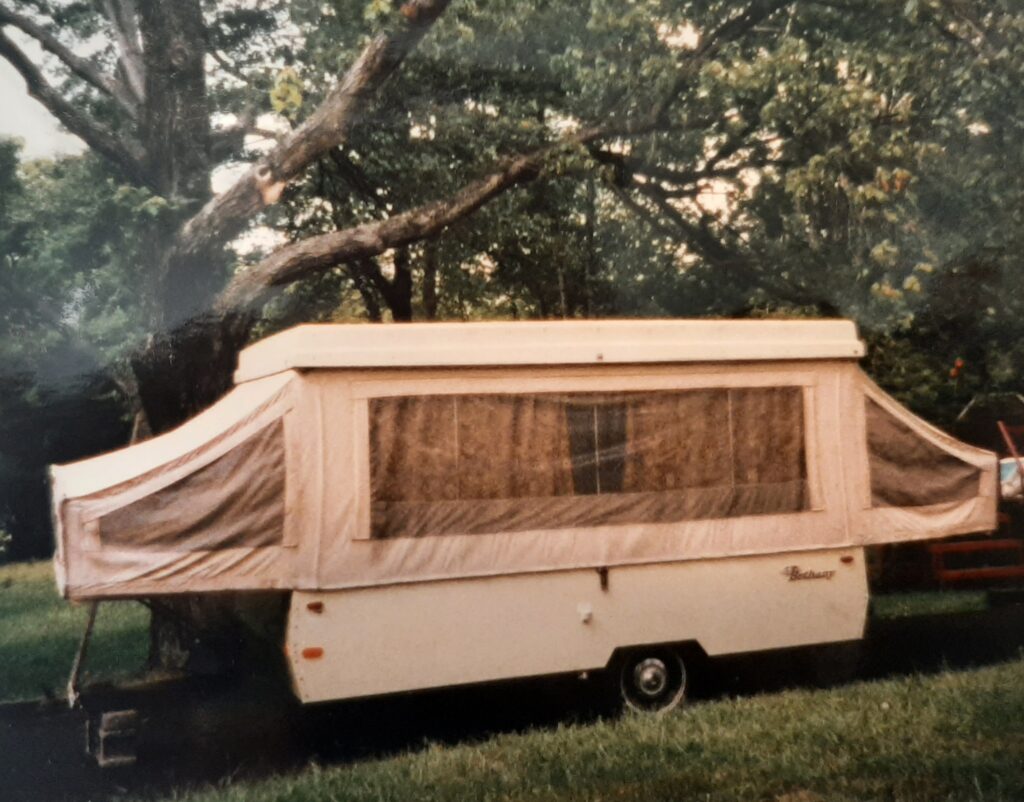
Chapter 1: The Tent Trailer By Richard Mabey Jr. In early September of 1971, I turned 18 and began my first semester at County College of Morris. It was a most wonderful, joyous and magical time. I was very devoted to my girlfriend, Penny Landing. I had this most incredible feeling that a new world was opening for me. I had a 1961 white Ford Falcon. I thought I had the tiger by the tail. Growing up in the old Mabey Homestead, was akin to growing up in a boarding house in a way. We would often have cousins and good friends, from far and wide, stay for a while. Patrick and Maureen Cavanaugh were first cousins to my grandmother, Bertha Mabey. They had all grown up together in Clifton. They had a common bond of having sailed the Atlantic from the Emerald Isle to come to the land of golden opportunities, namely the good old U. S. of A. In the Fall of 1971, Cousins Patrick and Maureen came to visit us for about a month. They lived in Morgantown, West Virginia. Grandma Mabey was now a widow and lived with us at the old Mabey Homestead. I remember that, before our cousins came to visit us, Dad asked me if I would mind bunking in the tent trailer in our backyard. This way, the cousins could have my bedroom to sleep in. At first I was a bit reluctant, but agreed to make the sacrifice. I remember that Dad most sincerely thanked me for being such a team player. It was all so very wonderful to have my cousins visit. Patrick talked about the prejudice that Irish folks suffered in the 1920’s and 1930’s. How some of the silk milks in Paterson had signs up, “Irish need not apply.” Grandma Mabey and her cousin, Maureen, both worked in the same silk mill in Paterson. They would take a bus to and from work. They reminisced of their days of coming of age, in an Irish neighborhood of Clifton. I had set up a little apartment for myself, in our family’s tent trailer. It was set up in the driveway, right beneath the tall maple tree in our back yard. This was the very same tall maple wherein I had built my three-tier tree fort when I was a boy. I had read Thomas Wolfe’s classic novel, “Look Homeward, Angel,” upon the second tier planking of my tree fort, during my high school years. Now, I was a college man, still reading Thomas Wolfe, lost in his novel, “You Can’t Go Home Again.” I remember one September night, sleeping in the tent trailer, and my bladder called to me to take a walk into the forest to find a tree. I remember walking in my pajamas and robe and slippers across the backyard and then across Earl’s Meadow to enter into the forest, to the east. After “watering the tree,” as we called it in the scouts, I walked to the tree line looking out to Earl’s Meadow. I took a minute and sat down upon the fallen tree. This was the very same fallen tree that Grandpa Mabey and I would sit upon, while he told me tales of his youth and young manhood. It was only a few years ago, that Grandpa still had a big garden growing in Earl’s Meadow, with rows and rows of ears of corn growing. Grandpa used to say to me, “son, grow a garden and your family will never go hungry.” I remember something deeply touched my heart that September night. It was the middle of the night. The full moon lit up Earl’s Meadow. I could hear the echo of Grandpa telling me stories of working at Incline Plane Ten East, along the old Morris Canal. I felt the heavy weight of mourning. I cried. Then, I cried even more. At the time, my girlfriend Penny and I were going through some rough times. I was working 29 hours a week at the A&P and taking a full course load at County College. It was only early in the semester, but I was already struggling with my Economics Class. And, to top it all off, my boss at the grocery store was giving me an exceptionally hard time. It seemed I could do nothing right by him. Penny was upset with me, because I no longer had the time, like I did during the Summer, to see her as often. While the tears rolled down my cheeks, sitting upon the fallen tree, I prayed and prayed and prayed for God to bless me with inner peace. I know how strange this may sound. But while I prayed, I felt the presence of my grandfather. I could almost feel the weight of his arm over my shoulder. Holding my shoulder and gently whispering to me, “don’t worry Dicky Jim, it’s going to be okay.” Nearly 55 years have passed since that fateful night of September of 1971, when I felt the definite presence of my beloved grandfather. And, it’s been over 58 years since Grandpa Mabey went Home to be with the Lord. I don’t think a day has gone by that I haven’t thought of that wonderful, dear old man. I’ve had times when I’ve been on top of the mountain. I’ve had times when I’ve walked through the darkest valleys. But through it all, I have always felt the endearing presence of my beloved grandfather. Is it possible that our relationships with loved ones, continues after their passing from this physical planet? Is it possible that when close loved ones pass, that they become guardian angels to us, guiding and protecting us in life? Life is short. Painfully short. Time spent holding grievances and bad feelings for someone, is wasted time. Love one another. Care for another. Forgive, forgive and forgive again the wrong doings people may act upon you. For truly, love is the greatest force in
New Jersey Native Recalls Lessons Learned from 9/11
By Evan Wechman Twenty-five years after surviving the Sept. 11 terrorist attacks, Marlboro, New Jersey native Aaron Levenson is determined to make sure Americans never forget what he witnessed that morning. Levenson wants to share his experiences and lessons he has learned with others, whether they are adults or children too young to have first-hand knowledge of that day. Six years ago, his rabbi approached him on behalf of the United Jewish Federation, which was looking for 9/11 survivors to share their experiences. Levenson thought there was no better time to begin speaking. “The feeling that I always had is you’re doomed to repeat history if you don’t learn from it,” Levenson said. “When we have a moment of silence at work, if you don’t know why we’re doing that, then it doesn’t matter. I heard in the news recently that they’re considering not having a security check-in (at the airport) because it’s not convenient to everybody, and that the lines are too long. Why do you think that is? If you don’t know what happened in the first place, you’re making a very uninformed decision on why to take it away.” He recalls the day he got off his train at Fulton Street near the World Trade Center, hoping to take the path to Jersey City, when everything changed instantaneously. “I got to my stop,” Levenson said who was working for Merrill Lynch at the time.“We all walked out of the subway, and everything was kind of in commotion. And I was coming out of the subway. I didn’t make it to the World Trade Center yet. But If I had gotten on the subway before the one I got, I would have been in the World Trade Center.” “We didn’t know what was going on,” Levenson later added. “It was nothing that you could ever compare this to. And from the angle, we just saw the smoke and fire.” The realization of the horrors he and the other commuters were seeing soon dawned on him. “I started seeing people fall and jump, so as I’m looking up, as we’re all looking up and looking at the fire, there were thousands of pieces of paper flying in the sky, and it was hard to tell the difference how high up they were whether that was paper or a person?” he said. ”You couldn’t tell.” Though Levenson, 53, was only in his 20s at the time, the terror of the attack and of what he saw remain with him today. However, he also remembers the unity of the country in the days and months immediately after that tragic day. He recalls the beautiful commercials appearing on the television nightly of every home in the United States having a flag attached, letting us and other countries know that we were not divided, but one people, all together in this. The spirit of patriotism and respect for one another stood out for him. More specifically on that day, he recalls people of different races and religions helping one another, regardless of their differences. “Everybody was helping everybody,” he said. That’s why Levenson, who now works for Morgan Stanley, continues speaking about Sept. 11. He worries that the unity and patriotism Americans showed afterward are fading. “I was there. I will never forget 9/11 any day,” Levenson said. “I don’t need an anniversary of 9/11 to never forget. What I’m worried about is that people say never forget, but they forget 364 days of the year except one and then move on.” The New Jersey native, even 25 years ago, was aware that memories could fade with time, so he wrote an essay for himself months after so he can always be reminded of the sights, smells, and raw emotions experienced during that day. “Besides the visual sensory, it was the smell,” he said. “You can’t mimic it. It was the smell of burning rubber. It was the smell of burning bodies. I still smell it when I see pictures of the twin towers falling. I smell it more than I see it, and that’s something that’s hard to explain.” For Levenson, he will keep sharing his story so the lessons of that tragic day are not lost on today’s children. He hopes that the patriotism that rallied the country 25 years ago is still present today. The memories of that day were of course not just a lesson for others, but for himself as well. He takes time these days to enjoy the small things in life like noticing dandelions sprouting after a brief winter thaw in the middle of January, and more importantly, the people he surrounds himself with like his wife and daughter. “You realize what’s important and what the priorities are, and I will never forget that.”
National Night Out 2026

The Mount Olive Township Police Department is happy to announce another successful National night Out! We estimated over 2000 residents and neighbors were in attendance. The night was filled with fun activities including pony and hot air balloon rides, inflatables, cute adoptable puppies and dogs to cuddle, amazing music, and of course the fireworks! Thirty of our officers were in attendance ensuring that the event was a safe and fun filled event. There was a shared sense of friendship and community felt by all. We look forward to what next year’s event will bring!
Skully’s Free Costumes for All Returns This Fall
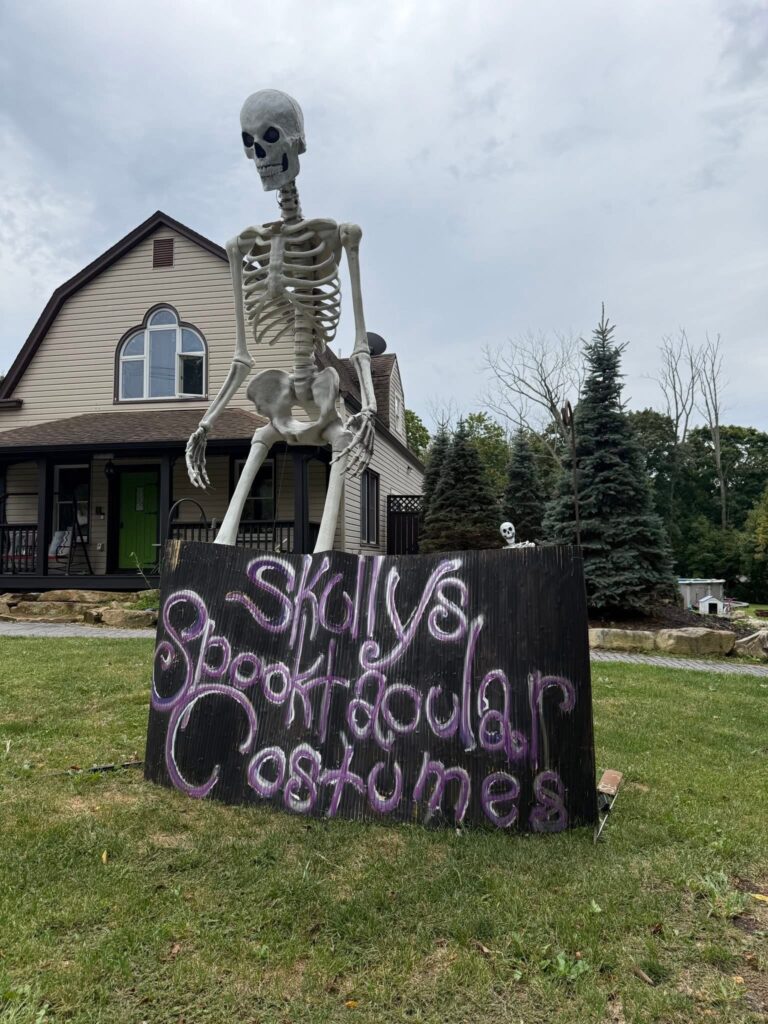
By Cheryl Conway Another year around the full moon—expected to rise Sept. 26 and Oct. 26, just in time for Halloween—who knows what might be lurking just beyond the shadows at 5 N. Mount Olive Road in Budd Lake, where Skully, the 12-foot skeleton stands tall. Fortunately, there’s no need to panic—Halloween is just around the corner and it is time for Skully to share his free costumes to anyone who is haunted by not having one for this year’s trick or treat. The third year for Skully’s Costume Closet expects to be a charm with more space and racks. Skully’s Costume Closet runs through November 1 and is completely free for the community. Anyone is invited to stop by to pick out costumes, accessories, makeup, or other Halloween items. Doors for Skully’s Costume Closet are expected to open on Tuesday, Sept. 1. Skully has been resting up and getting ready for the season. “Skully has been a bit under the weather, he’s awaiting a new look and makeup,” admits his owner Minerva Adams, organizer of the initiative. “We will be unveiling him soon!” While costumes galore will be the repertoire, a new enchanted theme awaits. “We are trying to change up our theme for the Halloween season,” shares Adams. “We will again provide the costumes, participate in the Trunk or Treat.” What is certain: The closet has expanded thanks to so many donations and growing supply of costumes every year. “It was one side of the garage last year, we had to rearrange, remove and clear the other side for more racks and space!” admits Adams. “The costume closet is in the garage structure in our backyard; we put in a patio and sidewalk to the side door of the garage.” Growing in popularity year after year, costumes come and go and get replenished, so no trick-or-treater goes without! “We have all sizes, from infants to adult, inflatables, accessories,” lists Adams. Men, women, children, infants, skeletons 😊 “We had a decent amount used last year but we had a steady flow of donations from the community and Once Upon a Child was extremely gracious by donating a huge amount of costumes,” adds Adams. The number of costumes donated each year remains a mystery, but some fear that Skully most likely knows. Donations are always welcome. “Donations can be any time, they can be left on the front porch or in the closet,” says Adams. “People can come by almost any time. In the evening hours we will turn the lights on. Mostly on the weekends at first and as we get closer, we’ll leave the lights on during the week. We will post times on the Skully Adams Facebook page.” Skully also enjoys seeing photos. “We love when we get sent photos or get tagged in posts,” says Adams. As far as helpers, the Adams’ family got it covered. “The kids helped clean up, hang and sort items,” says Adams. “Christian (husband) helped with the decorations this year.” Anyone who knows the Adams’ family—no, not the one on TV—is familiar about how they like to bring the community together around Halloween. Each year, this family tries to create something fun and inviting for all to enjoy. From the lemonade stands, pumpkin patches and free costumes, Skully stands tall as a fixture/mascot with its family’s altruistic gestures. “Halloween should be fun for everyone, and no one should have to skip out on dressing up because of the cost,” Adams says previously. As far as this year’s pumpkin patch, the community may have to wait to see if anything grows. “No pumpkin patch this year,” says Adams, “even though I did sneak some seeds in among my husband’s other plants in the front.” For announcements and updates, visit https://www.facebook.com/SkullyRAdams
Eagle Scout’s Sensory Wall Inspires Learning
By Cheryl Conway Students at Sandshore Elementary School in Budd Lake are returning to school this fall with a new sensory wall that will encourage hands-on learning, creativity and inclusion thanks to a local Eagle Scout and his project. For Akash Gopal, earning the rank of Eagle Scout wasn’t just about completing a final requirement—it was about creating something meaningful. The 18-year-old Mt. Olive resident and recent graduate of Mt. Olive High School, designed, funded and led the construction of the new sensory wall. With the help of about 20 other scouts—ranged 11 to 17 years old—and volunteers from his Troop 249, in Budd Lake, under Scoutmaster Day Dwyer, Gopal’s project is now complete, making sense as to how all if his hard work will pay off for years to come. “The sensory wall gives students a fun, interactive learning space that allows for sensory development and creativity for younger children,” says Gopal. “It will continue to benefit children for many years and supports students of all abilities.” Involved in Scouting for the past 10 years, Gopal started in Troop 312 and later moved to Troop 249 to complete his journey as an Eagle Scout on June 4. He is proud to have completed the Sensory Board Project before taking flight to Purdue University this fall. Planning for his began in late 2025; construction and installation of the permanent wall was completed in June, he details. “The project was completed with the support of Troops 249 and 312, along with many generous donors and volunteers,” he says. “The project required several months of planning and fundraising, along with approximately 85+ volunteer hours to complete.” The creation of a sensory wall for Sandshore Elementary School “gives students, especially those with sensory processing needs and other special needs, a hands-on way to dive into interactive activities,” describes Gopal. “I planned and managed different stages of the project, including fundraising, budgeting, purchasing materials, organizing volunteers and looking over the construction processes of the wall.” When he realized that the school was lacking a hands-on-tool for all students, Gopal brainstormed to create his project. “I have always enjoyed working with children through volunteering and mentoring,” says Gopal. “When I noticed that none of the elementary schools in my town had a sensory wall, I wanted to create something that would make a lasting difference for students, especially those with special needs.” Gopal is so thankful for all the support of his Scouts, volunteers and community. “I was supported by fellow Scouts from Troops 249 and 312, my family, friends, adult leaders, generous donors, Sandshore Elementary School and Superintendent Mrs. Bangia,” he says. “Funding was generously provided through donations and support from Sandshore Elementary School. “The project has been completed, and I am grateful for the tremendous support from the community, donors, volunteers, and everyone who contributed their time and resources,” he adds. “I would like to thank everyone who supported this project, especially my fellow Scouts, Scout leaders, family, friends, donors, volunteers and the staff at Sandshore Elementary School,” he says. “Their encouragement and support made this project possible, and I am honored to leave behind something that will benefit future generations of students.” While the sensory wall will serve students for years to come, the experience also left a lasting impression on Gopal. “Completing this project was one of the most rewarding experiences of my life,” realizes Gopal. “It taught me valuable lessons in leadership and teamwork. Knowing that the sensory wall will positively impact children for years to come makes all of the hard work worth it. “I was so happy when the school reached out to me saying how the children would use the board during their breaks and it was working well,” he concludes.
Mt. Olive Schools Ready to Shine in New School Year

By Cheryl Conway As students and faculty return to classrooms this fall, the Mt. Olive Township School District is building on a year of academic growth and expanding opportunities for success with stronger instructional programs, enhanced student support, facility improvements and new initiatives designed to help every student thrive and staff members to shine. School in Mt. Olive was set to open Aug. 31, to faculty and students were to report to their first half day on Sept. 2. From its curriculum, programs, technology and other initiatives, the MOTSD is ready to take on its 2026-2027 season. “For 2026–2027, the focus is not on starting over or continually introducing new initiatives,” explains MOTSD Superintendent of Schools Dr. Sumit Bangia. “It is about taking the work already underway and implementing it more consistently and effectively across the district. That is also consistent with the second year of our 2025–2030 Strategic Plan, which continues to guide our work around Wellness, Student Achievement, Finance/Facilities/Technology, and Governance.” Adds Bangia, “We are looking forward to a great 2026–2027 school year!” Last school year was effective, and this year the plan is to progress with some of the ongoing initiatives. “One of our most important areas of progress during the 2025–2026 school year was our elementary academic programming, particularly in mathematics and English language arts,” says Bangia. “In mathematics, we continued the implementation of Conquer Math, which focuses on developing students’ conceptual understanding of mathematics rather than simply memorizing procedures,” she details. “Teachers have received sustained professional development around these instructional practices, including the use of concrete models, visual representations, mathematical reasoning, and consistent mathematical language across grade levels. Our fourth- and fifth-grade teachers have now completed two years of Conquer Math training, while our K–3 teachers completed their first year.” The district has “been encouraged by the results.” Its elementary mathematics growth data showed districtwide median progress toward annual typical growth increase from 104% in 2024–2025 to 121% in 2025–2026, “with every elementary grade level exceeding typical growth,” she says. “While there is always more work to do, those results are an encouraging indication that the instructional changes occurring in our classrooms are making a difference.” The district also completed its first year of implementation of its Benchmark ELA program in grades K–5, which provides greater consistency in rigorous, standards-aligned reading and writing instruction. “The first year was focused on building teacher familiarity with the program and establishing common instructional practices,” details Bangia. “That work will continue this year as teachers deepen their use of the resources and we continue evaluating student performance.” During the 2025/2026 school year, the MOTSD continued strengthening its systems of academic intervention and support. “Our goal is to identify student needs earlier, use student performance data more effectively, and provide targeted intervention, enrichment, or extension based upon those needs,” says Bangia. It also continued to provide students with a wide range of opportunities outside of the traditional classroom through athletics, extracurricular activities, STEAM programming and summer opportunities. One summer highlight was the first year for its Youth Leadership in Public Safety Academy, which brought together 29 middle school students and 12 public-safety agencies for a week of hands-on learning and exposure to careers in public safety. Its summer STEAM Camp also continued to provide engaging learning opportunities for students, with additional program choices offered this year. What’s to come for 2026/2027 At the elementary level, the district plans to continue with Conquer Math and Benchmark ELA. “Teachers will continue receiving professional development and instructional support, and we will use student data to determine where additional attention or intervention is needed,” says Bangia. Mt. Olive Middle School students can expect a restructured daily schedule to provide students with a dedicated 30-minute ACCESS period every day. ACCESS stands for Academic Support, Connections, Counseling, Enrichment, and Student Services. Previously, students had two 35-minute periods each week for many of these purposes, explains Bangia. T “The new structure creates time every day for targeted academic intervention and enrichment, counseling and related services, relationship-building with staff, and proactive social-emotional support,” explains Bangia. “It also allows many of these services to occur without routinely pulling students from core academic classes.” Also, regular classes will be standardized at 47 minutes, resulting in a reduction of only four minutes of instructional time per class over the entire week while creating a 30-minute support period every day. “We believe this is an important evolution in how we support middle school students.,” notes Bangia. “Instead of trying to fit intervention, counseling, enrichment and other supports around the academic schedule, we are intentionally building time for those services into the school day.” The district also has faculty on its radar as it will continue the Leading Edge Academy, which is designed to help develop employees who are interested in future leadership opportunities. “The goal is to build leadership capacity from within our own organization by giving participants greater exposure to the work of school and district leadership, opportunities for mentoring and professional growth, and authentic experiences that help prepare them for future leadership roles,” says Bangia. Staff and faculty can also expect to be recognized with a new initiative: Shining Star Moments staff recognition program. “The idea is simple: Recognize specific actions by employees that bring our Strategic Plan and district goals to life,” says Bangia. “A Shining Star Moment does not have to be something enormous. It might be a staff member helping a student feel a stronger sense of belonging, a team trying a new instructional practice, or someone finding a better way to use district time or resources. “Staff members will be able to nominate themselves or colleagues, and each month we will recognize a Shining Star recipient from every building and department,” the school leader details. “The intent is to make sure that the outstanding work occurring throughout our district does not go unnoticed and to reinforce a culture where people recognize one another for making a meaningful difference.” Another significant change for this school year
Having Their Backs, One Backpack at a Time

By Cheryl Conway When it comes to fighting food insecurity, the Mt. Olive Food Pantry has long had the backs of local families. Now, thanks to a donation of 100 backpacks filled with essential school supplies, it also has the backs of local students, helping them begin the school year with confidence and all the tools they need for an A+ start. The Mt. Olive Republican Club recently partnered with the Mt. Olive Food Pantry to donate 100 fully stocked backpacks to local students who are less fortunate. The first time for this initiative— Mount Olive Republican Club Community Donation— the MO Republican Club turned over the filled backpacks to the MO Food Pantry on Saturday, Aug. 8, just in time for the new school year. “All of us care deeply about the children and families in our community,” says Martin Welzmuller, president of the MO Republican Club and chair of the Mt. Olive County Committee. “Each of us stepped up to help ensure that students in Mt. Olive have the support they need to start the school year confident and prepared.” The initiative was organized by the MO Olive Republican Club, with key support from “our executive leadership, local sponsors and community members, to help with our community service and helping families in need,” Welzmuller says. “Myself and [Councilwoman] Mary Lalama came up with the idea, and several people help donated to fund the cost of the backpacks.” The purpose of the initiative is to support local students and families by procuring, assembling and delivering essential school supplies and backpacks directly to the community through the Republican’s club partnership with the Mt. Olive Food Pantry. “The Mt. Olive Food Pantry works directly on the front lines with local families in need,” says Welzmuller. “Partnering with them ensures the backpacks go straight to the students who will benefit most before the school year starts.” Adds Lalama, “I wanted to start with the food pantry because we have 90 families that use the food pantry so I figured that would be a great place to start and then maybe to reach out to some of the schools to find out some other families as well.” As far as the number of bags, “We selected 100 to directly meet the specific needs identified by the Mt. Olive Food Pantry while ensuring every single bag was fully stocked with high-quality supplies,” explains Welzmuller. The 100 backpacks are durable, standard 17-inch bags available in a variety of school-friendly colors, including blue, red, black and teal. Made by high-quality commercial manufacturers, the backpacks are designed to withstand the demands of the school year. Each one is filled with essential, grade-appropriate school supplies, including notebooks, folders, pencils, pens, crayons, glue sticks, safety scissors, rulers and pencil pouches, giving students everything they need to start the school year prepared, details Welzmuller. The total cost for the 100 backpacks and packed school supplies was approximately $855. “Funding and supplies were contributed directly by our club members, local elected officials and community supporters,” says Welzmuller. “In addition to the backpacks, we presented the Mt. Olive Food Pantry with a $110 monetary donation alongside non-perishable food collected during our community barbecue event this past Saturday.” Now that the bag has been opened, the MO Republican Club may plan to make this an annual initiative. “This is the inaugural year for our student backpack drive and if needed we will do it again in the future,” says Welzmuller. “While our club has consistently hosted community service events over the years, we are now making a concerted effort to publicize our outreach so residents can see the charitable work we do to support Mt. Olive.” For those interested in getting involved with the MO Republican Club, community members are invited to attend the next Mt. Olive Republican Club meeting on Wednesday, Sept. 16th at 7 p.m. at Enzo’s Pizzeria in Budd Lake. Connect at mountoliverepublicanclub@gmail.com or visit mountoliverepublicanclub.com.
Kindergartners Begin School Year with Free Bags & Supplies
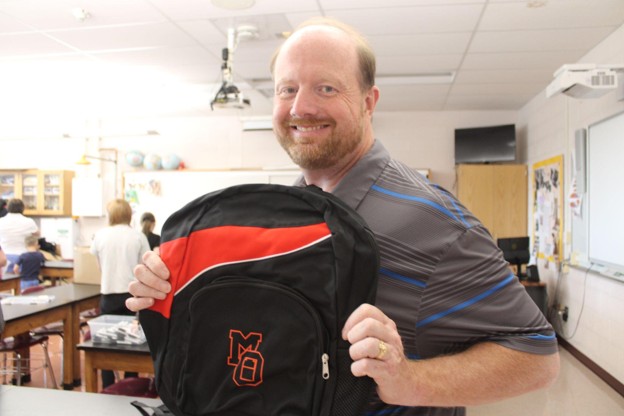
By Cheryl Conway Shopping for school supplies and backpacks is always a treat for parents and their kids, but those with kindergarteners starting this school year, The Education Association of Mt. Olive has got it covered! Thanks to the EAMO, 350 kindergartners throughout the Mt. Olive Township School District will be receiving a new backpack filled with essential supplies to start their journey as a student in Mt. Olive. The initiative—Kindergarten Bag of Success—has been made possible through the New Jersey Education Association Families and Schools Together Work For Children (FAST) Grant. With the Kindergarten Bag of Success, all students will start their year off by having all the tools they need to be prepared for a fabulous year of learning. “The Education Association of Mt. Olive is providing the backpacks to help strengthen the connection between our kindergarten classrooms and families,” says Malani Leitzel of Hopatcong, who serves as EAMO’s PEP/FAST Grant coordinator. “The bags contain resources that connect to what students are learning and using in school, giving families an opportunity to continue and support that learning at home. “Another important goal is to ensure that all families have access to the same materials and resources to support their children’s learning,” says Leitzel. “This initiative helps build a stronger partnership between educators and families while promoting equitable access to learning materials beyond the classroom.” Not the first time a backpack donation initiative has been done in MOTSD, the initiative was previously implemented in 2019 at Chester M. Stephens with Lisa Lamendola through a PEP (Public Education Partnership) Grant, shares Leitzel. However, it has not been done since 2019. “What began as a simple idea to provide paper-and-pencil materials has grown into a community-wide initiative supporting Mt. Olive’s youngest learners,” explains Leitzel. “The idea was inspired by something that had been done in the past, which EAMO Co-President Lisa Lamendola suggested bringing back. I took that idea and put it into motion. I reached out to the PTO presidents at all four elementary schools to get their thoughts and feedback, and they were all excited about the opportunity. “This year, I applied for a FAST Grant to bring the initiative back and strengthen the connection between what our kindergarten teachers are using and teaching in the classroom and the families we serve,” she explains. “The goal is to provide families with resources that support and extend the learning taking place in kindergarten.” The EAMO purchased all of the items included in the 350 backpacks provided to all four elementary schools throughout the Mt. Olive school district. “All four Mt. Olive elementary schools were selected to participate in this initiative,” Leitzel says. “The goal is to provide kindergarten students and families, particularly those who are new to the district, with an opportunity to build a positive relationship between families and school staff from the very beginning. “By providing materials that connect directly to what students are learning in the classroom, the initiative helps families feel welcomed, supported and connected to their child’s education and school community,” she adds. The Kindergarten Bags of Success are red and black, and each is filled with materials designed to support and reinforce the skills students are learning in the classroom. Each bag includes: Laminated letters for word building, letter recognition and letter sounds; alphabet practice folder and worksheets; kindergarten workbook; dry-erase sleeve; math counters; number and math practice folder; play dough; two dry-erase markers and a dry eraser; crayons; two pencils and a pencil grip; scissors; pencil pouch; water bottle; and stickers. “These materials are intended to give every kindergarten family access to hands-on learning resources that can be used at home to reinforce classroom learning,” stress Leitzel. The drive ensures that no kindergarten child will start the school year without these tools for success! “This initiative benefits students and their families by providing hands-on learning materials that directly connect to what kindergarten students are learning in the classroom,” explains Leitzel. “These resources give children opportunities to practice important early literacy and math skills at home in a fun and engaging way. The materials are designed to be used throughout the school year, allowing families to continue reinforcing classroom learning at home. As the year progresses, kindergarten teachers will also be able to provide families with additional ideas, activities, and ways to use the materials to support their child’s learning. “The initiative also ensures that all kindergarten families have access to the same learning materials, helping to provide equitable opportunities for students regardless of the resources they may already have at home,” she adds. “Most importantly, the Bags of Success help strengthen the connection between school and home,” continues Leitzel. “Families can see and participate in what their children are learning, while students can reinforce classroom skills through activities at home. For families who are new to the district, this initiative creates an early, positive connection with their child’s teachers and school community.” The total grant amount for the Bags of Success initiative is $10,500. It is funded by the EAMO, the staff union of MOTSD and is supported by union dues. “The grant we secured for the project is funded through EAMO’s union dues, which support initiatives that benefit students, families and the school community,” she adds. Looking back at how it all came together, Leitzel is truly thankful for all community effort and support. “Once the initiative was approved by NJEA, the materials began arriving,” Leitzel details. “EAMO members worked behind the scenes to laminate, cut, package and collate the materials so that each backpack would be ready for a kindergarten family. “On July 20, the initiative became a true community event,” she explains. “More than 45 people came together at the high school, including EAMO members, PTO members, a Girl Scout troop and MORT of Mt. Olive. Everyone worked together to assemble and package the 350 Bags of Success.” Plant a seed and watch it blossom. “What started as an idea has grown into a community effort supported by the Education Association
Health Expansion
Special visitors met with Mayor Joe Nicastro and Business Administrator Andrew Tatarenko on August 4, 2026 from the New Jersey Department of Health Division of Local Public Health Rikiyah Mixson and Karima Saidhatimi . They were given a tour on the progress, and everyone is looking forward to the expansion and serving the community. In photo is Derrick Webb Director of Health /Health Officer , Mayor Joe Nicastro , Rikiyah Mixson Public Policy Specialist/Transformation Coordinator , Karima Saidhatimi Public Health Liaison and Andrew Tatarenko Business Administrator. Below is the information from when they officially broke ground. Mount Olive Health Center Expansion Monday, December 1, 2025 marks a major milestone as we officially break ground on the Township of Mount Olive Health Center Expansion, ushering in a brighter future for our community’s health and wellbeing. The Project Overview Ceremonial Groundbreaking Welcome & Opening Remarks: Andrew Tatarenko Remarks from Mayor Joe Nicastro Project Overview: Andrew Tatarenko Acknowledgments: The Musical Group Architects Van Cleef Engineering Pal-Pro Builders, LLC. Remarks from Key Stakeholders: Derrick Webb, Mount Olive Health Director Special Presentation/Recognition: Congressman Thomas Kean, Jr. The construction of the new Mount Olive Township Health Center is the culmination of years of vision, planning, and collaboration that began with the development of the Mount Olive Township Community Health Assessment in 2019. Through this year-long process, Township officials, health professionals, and community members identified key areas for public health improvement and recognized the growing need for expanded health services. Building on those findings, the Township pursued federal funding through the Community Project Funding grant program, administered by the U.S. Department of Health and Human Services. As a result of that effort, Mount Olive Township was awarded $1,982,500 to support the construction of a new 7,164-square-foot Health Center. The new facility—located adjacent to the Senior Center—will serve as a centralized hub for the Health Department, Health Clinic, Public Access, and Social Services. This modern, fully equipped building will enhance the Township’s ability to deliver comprehensive public health programs, improve accessibility to vital services, and strengthen community wellness initiatives. Beyond its local benefits, the new Health Center will also position Mount Olive Township as a regional leader in shared health services, expanding collaboration with neighboring municipalities and agencies to deliver efficient, cost-effective, and coordinated care across the region. Additionally, the relocation of the Health Department will free up much-needed space in the existing municipal complex, allowing for the expansion of the Police Department. This future enhancement will improve operational capacity and further strengthen public safety services for Mount Olive residents. Together, these improvements reflect Mount Olive Township’s ongoing commitment to building a healthier, safer, and more connected community for all