
By Cheryl Conway
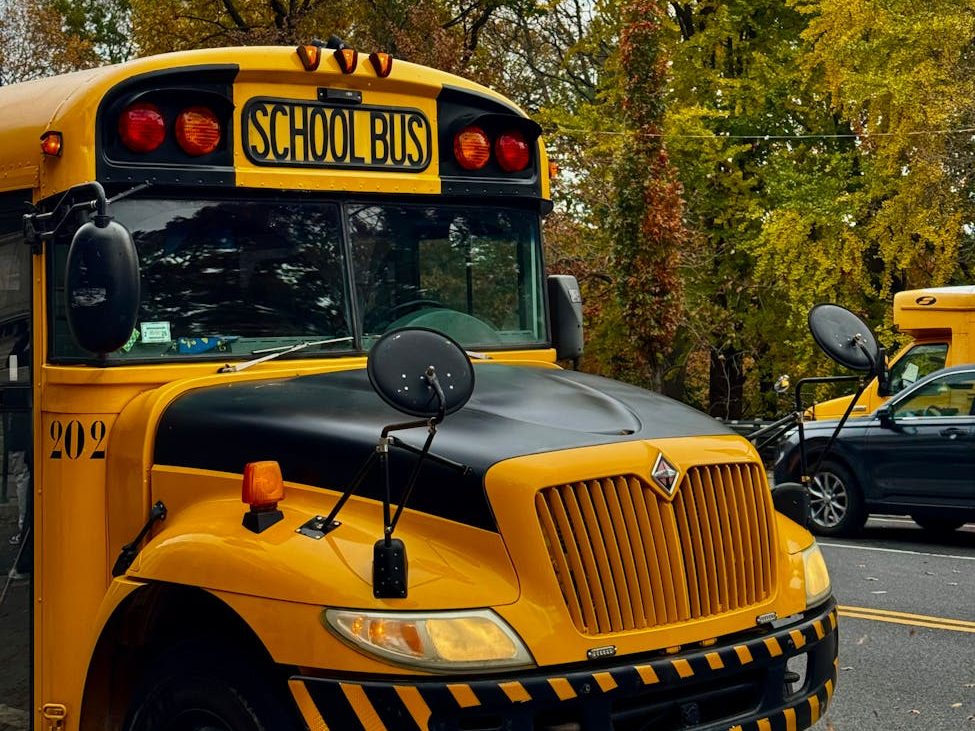 The hustle and bustle of back to school is here, and for some, the concern of speedy drivers on school roads.
Relying on speed humps on roads leading to schools to reduce speeding may no longer be the case in Mt. Olive.
Residents, for example, traveling near Chester M. Stephens Elementary School in Budd Lake may have noticed a recent change: The speed humps on the roadway have been removed.
Karen Clint of Sunset Drive, the road that leads to CMS, shares her concerns at the August 5 Mt. Olive Twp. Council meeting. Her granddaughter is a student at CMS and she is fearful that more drivers will now speed on that road.
Lots of people drive on that road—teachers, parents, bus drivers—and many do not obey the speed limit, she says.
“It’s a straightaway of nothing but fastness,” says Clint. She says the speed signs on that road have stopped working and she would prefer that the speed bumps be reinstalled on the road.
While some neighbors worry the change could encourage speeding, township officials say they have replaced the humps with pavement striping and will monitor traffic before deciding whether additional measures are needed.
“The speed bumps leading to CMS are no longer there,” confirms Mt. Olive Twp. Business Administrator Andrew Tatarenko. “We have stripped the road and added fog lines which is another way to reduce speed. We will monitor the area during the school year and if speed is still an issue, will revisit the speed humps.
“We are collecting new data,” he shares at the meeting.
The speed bumps on school property parking lots, like at Tinc Elementary in Flanders, are still in place.
“To clarify, speed bumps in elementary parking lots are installed by the BOE, which is different than speed bumps installed on public roads,” explains Tatarenko. “There are currently no speed bumps installed on any township road. The speed bumps were installed around 15 years ago and have all since been removed as we re-pave. They were placed on Tinc Road, Sunset Drive, Carson Road, Alcrest Avenue and Park Place. The Solar/electric Powered Traffic Speed signs are installed on various roads to improve road safety and to immediately alert drivers to slow down.”
Mt. Olive Twp. Police Traffic Sgt. Bill Galop provides more details.
“Currently, there are no roadways in Mt. Olive Township with speed tables,” Galop confirms. “Speed tables that had previously been utilized were removed due to concerns related to noise, maintenance and other operational considerations.
Speed tables had previously been utilized to address speeding concerns and provide traffic calming, explains Galop.
“Since their removal, the township has moved toward other traffic calming strategies that can influence driver behavior and reduce vehicle speeds without some of the disadvantages associated with vertical traffic calming devices,” says Galop.
“When evaluating traffic calming options, the township utilizes methods recognized by the Federal Highway Administration (FHWA) Traffic Calming Toolkit and selects measures based on the characteristics and needs of the individual roadway,” he says.
Instead of speed tables, the township utilizes solar-powered radar speed feedback signs, also commonly referred to as driver feedback signs.
“These signs display an approaching motorist’s speed, providing immediate feedback and encouraging voluntary compliance with the posted speed limit,” he says.
The permanent solar-powered speed feedback signs are located on Netcong Road; Flanders-Bartley Road; Cloverhill Drive, northbound and southbound at Mountain View School; Park Place, northbound and southbound; Main Street; Corey Road, northbound toward the high school and southbound away from the high school; Wolfe Road; Sandshore Road, eastbound and westbound; and Connelly Avenue.
The MOPD also has several temporary radar speed feedback signs that can be deployed throughout town “in response to a resident’s traffic or speeding complaint or deployed proactively by the Traffic Unit to study a location where a potential concern may exist.”
Explains Galop: “The temporary signs serve two important purposes: They provide motorists with immediate feedback by displaying their speed and encouraging compliance with the posted speed limit; they collect and record traffic data, including vehicle speeds, traffic volumes and traffic patterns.
“The Traffic Unit analyzes this information to determine whether a documented speeding or traffic concern exists, identify when and where problems are occurring and determine whether additional traffic-calming measures, engineering changes, education or targeted enforcement may be appropriate,” he says.
These temporary devices will continue to be deployed throughout the township, he says, in response to community concerns.
“The data collected from these studies is used to evaluate traffic conditions and determine whether additional traffic calming measures are warranted,” he explains. “Rather than applying the same solution to every roadway, the goal is to identify specific concerns through objective data and determine which measure, if any, is most appropriate for a particular location.”
Back to speed tables. How effective are they?
“Speed tables can be effective at reducing vehicle speeds in their immediate vicinity; however, they are not necessarily the appropriate solution for every roadway,” says Galop.
“Vertical traffic calming devices can have unintended impacts, including increased vehicle noise, ongoing maintenance requirements, complications with snow removal, impacts on larger vehicles and potential delays to emergency response,” notes Galop. “They can also result in motorists repeatedly slowing for the device and accelerating after passing it, rather than producing a consistent reduction in speed throughout the roadway. Depending on the roadway, they can also encourage some motorists to seek alternate routes, potentially shifting traffic concerns to neighboring streets.”
Galop says lane markings, like on Sunset Drive, may be a more effective way to go.
“The markings reduce the perceived width of the travel lanes and create a more defined roadway environment,” he explains. “Making the roadway feel narrower to motorists is intended to encourage drivers to naturally travel at a more appropriate speed without the potential disadvantages associated with physical speed tables.
“A follow-up speed study will be conducted on Sunset Drive to evaluate vehicle speeds following the installation of the new markings and determine whether any additional traffic calming measures are necessary,” he says.
When it comes to traffic safety, Galop says the township focuses on engineering, education and enforcement.
“Engineering involves roadway design and traffic calming measures intended to influence driver behavior and encourage appropriate vehicle speeds,” he says.
“The police department works to educate motorists about safe driving practices through community outreach, public messaging, traffic-safety campaigns and direct interaction with drivers.”
As far as enforcement, “Speed studies and other traffic data are utilized to identify locations and times where targeted enforcement may be appropriate. Officers also enforce speeding and other motor vehicle laws throughout the township to address unsafe driving behavior and encourage compliance.
“By combining roadway engineering with education and enforcement, the township can address traffic-safety concerns through multiple strategies rather than relying on any single device or enforcement effort,” says Galop.
With school in session, Galop offers come traffic advice.
“With schools reopening, motorists should expect increased traffic as well as more school buses, pedestrians, bicyclists and parents dropping off and picking up students,” says Galop.
“Drivers should give themselves additional travel time, eliminate distractions, obey posted speed limits and school-zone regulations and remain particularly alert around schools, school buses, crosswalks and residential neighborhoods,” he continues.
“After a summer of different traffic patterns, the return to school can significantly change morning and afternoon traffic conditions,” adds Galop. “Being patient, attentive and allowing a few additional minutes for your commute can make a significant difference.
“No appointment or destination is important enough to jeopardize the safety of a child, pedestrian, cyclist or another motorist,” he adds.
In the end, traffic safety is a shared responsibility between the township, police and the public.
“The Traffic Unit will continue monitoring township roadways, responding to community concerns, conducting speed studies and analyzing traffic data,” says Galop. “That information allows us to evaluate the effectiveness of existing measures and determine where additional engineering improvements, educational efforts or enforcement may be appropriate.
“The goal is not simply to issue summonses,” says Galop. “It is to encourage voluntary compliance, change unsafe driving behavior and reduce crashes. Through the combination of engineering, education, enforcement and objective traffic data, the township can evaluate each traffic concern individually and determine the most appropriate response.
“As students return to school, we ask every motorist to slow down, remain attentive, allow additional travel time and do their part to keep our roadways and community safe,” concludes Galop.